
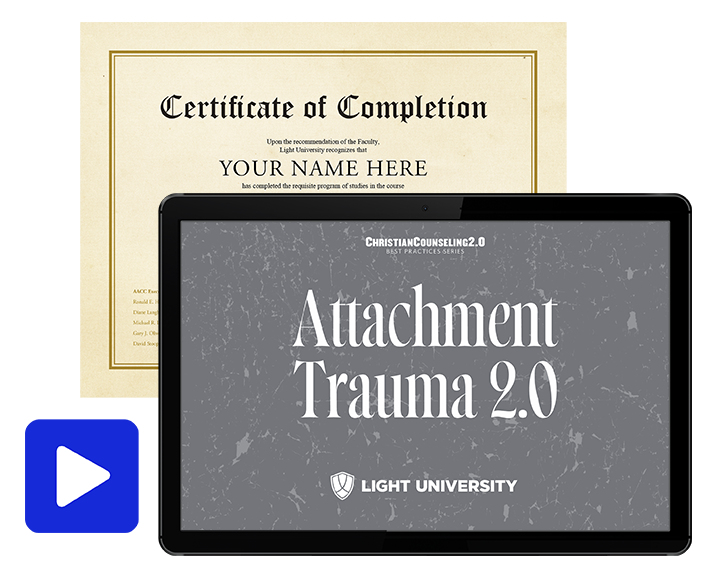
Attachment Trauma 2.0
Original price was: $149.00.$69.00Current price is: $69.00.
-
4.5 credit hours
Continuing Education Accreditations applicable to this course
NBCC, IBCC, Florida Board of Clinical Social Work, Marriage and Family Therapy and Mental Health Counseling
Intended Audience: Mental and Medical Health Professionals, Mental Health Coaches
About This Course
Attachment Trauma 2.0 provides advanced training on the clinical understanding and treatment of attachment trauma. The course examines developmental trauma, complex trauma, early relational trauma, cumulative developmental trauma, interpersonal trauma, and abandonment trauma. Participants study Bowlby’s attachment theory, the stages of separation, proximity maintenance, haven of safety, secure base, and separation anxiety. Ainsworth’s Strange Situation and the development of secure, anxious-avoidant, anxious-ambivalent, and disorganized attachment styles are explained. Content also addresses frightened and frightening caregiving, dyadic dysregulation, dissociation, and internal working models. Clinical application includes assessment of children and adults for developmental trauma disorder, reactive attachment disorder, disinhibited social engagement disorder, complex PTSD, and dissociative disorders, using observation procedures, interviews, and trauma screening tools. Treatment emphasizes safety, attunement, repair of misattunement, dyadic regulation, the 6 R’s of Healing, narrative development, connected relationships, and strategies that strengthen regulation and resilience.
Learning Objectives
Participants will…
- Identify and explain the stages of separation, the core qualities of attachment relationships, and how adverse childhood experiences contribute to secure, insecure, and disorganized attachment.
- Differentiate and apply clinical assessment tools for children and adults, including criteria for developmental trauma disorder, reactive attachment disorder, disinhibited social engagement disorder, complex PTSD, and dissociative disorders.
- Demonstrate and integrate treatment strategies that emphasize safety, attunement, dyadic regulation, repair of misattunement, and the 6 R’s of Healing in clinical practice
Lesson Titles
ATRM 101: Foundations of Attachment Trauma
Shannae Anderson, Ph.D.
This lesson explains how trauma and attachment intersect. Participants review Bowlby’s stages of separation, Ainsworth’s Strange Situation, and the development of secure, anxious-avoidant, anxious-ambivalent, and disorganized attachment. Topics include proximity maintenance, haven of safety, secure base, and separation anxiety. The role of adverse childhood experiences, frightened and frightening caregiving, and dyadic dysregulation are introduced as key contributors to attachment trauma.
ATRM 102: Clinical Assessment of Attachment Trauma
Shannae Anderson, Ph.D.
This lesson focuses on clinical assessment in children and adults. Participants examine developmental trauma disorder, reactive attachment disorder, disinhibited social engagement disorder, PTSD, complex PTSD, and dissociative disorders. The session highlights developmental trauma criteria, emotional and behavioral dysregulation, and relational disturbances. Tools such as the Strange Situation, adult attachment interview, developmental trauma disorder semi-structured interview, trauma screening inventories, and relational trauma questionnaires are reviewed for practical clinical use.
ATRM 103: Therapeutic Intervention and Treatment
Shannae Anderson, Ph.D.
This lesson provides treatment strategies for attachment trauma. Participants learn how to create safety, attunement, and dyadic regulation in the therapeutic relationship. The 6 R’s of Healing (relational, relevant, repetitive, rewarding, rhythmic, respectful) are explained as core principles of care. The session also covers repairing misattunement, developing coherent narratives, building connected relationships, using power with strategies, and supporting long-term regulation, resilience, and healing
Course Presenter
Shannae Anderson, Ph.D.
Continuing Education Approval Statements
 American Association of Christian Counselors has been approved by NBCC as an Approved Continuing Education Provider, ACEP No. 7543. Programs that do not qualify for NBCC credit are clearly identified. American Association of Christian Counselors is solely responsible for all aspects of the programs.
 The American Association of Christian Counselors (AACC) is an Approved Continuing Education CE provider by the International Board of Christian Care (IBCC). American Association of Christian Counselors is solely responsible for all aspects of the programs.
The American Association of Christian Counselors (AACC) offers some psychologists, therapists, counselors, social workers and play therapists Continuing Education (CE) credit due for good standing with certain states and a limited number of professional organizations. It remains the responsibility of each participant to be aware of state licensure and CE requirements.
Participants should check their state and/or local regulations regarding required continuing education hours. For more information Light University Continuing Education programs, please visit: https://lightuniversity.com/continuing-education-statements/
Related products
-
Sale!
Eating Disorders 2.0
Original price was: $149.00.$69.00Current price is: $69.00.-
-
Sale!
A Theology of Christian Counseling 2.0
Original price was: $149.00.$69.00Current price is: $69.00.-
-
Sale!

Money and Financial Management 2.0: What You Need to Know
Original price was: $149.00.$69.00Current price is: $69.00.-
-
Sale!

Racial Reconciliation and Healing 2.0
Original price was: $149.00.$69.00Current price is: $69.00.-
