

Become a Certified
Life Coach!
You have the passion to help others — our Professional Life Coaching Program gives you a proven path to succeed. Click below to master the art of coaching, grow in confidence, and gain the credibility you need to start and build your coaching business.
6,000+ Coaches Enrolled
24+ Hours of Video Training
24 CEU Credits
Educational Pathway for IBCC Certification
Turn Your Passion Into a Rewarding Career
Coach with Confidence
If you’re second-guessing yourself as a coach, your clients will too. But confidence isn’t something you wake up with — it comes from the right strategies, a clear plan, and real experience. This course gives you all three, so you can coach with certainty.
Master Your Coaching Niche
Find Clients and Grow Your Coaching Practice
To find clients, you need a plan. This course gives you the proven steps to attract the right people, market yourself with confidence, and build a coaching business that thrives.
View Full Lesson List
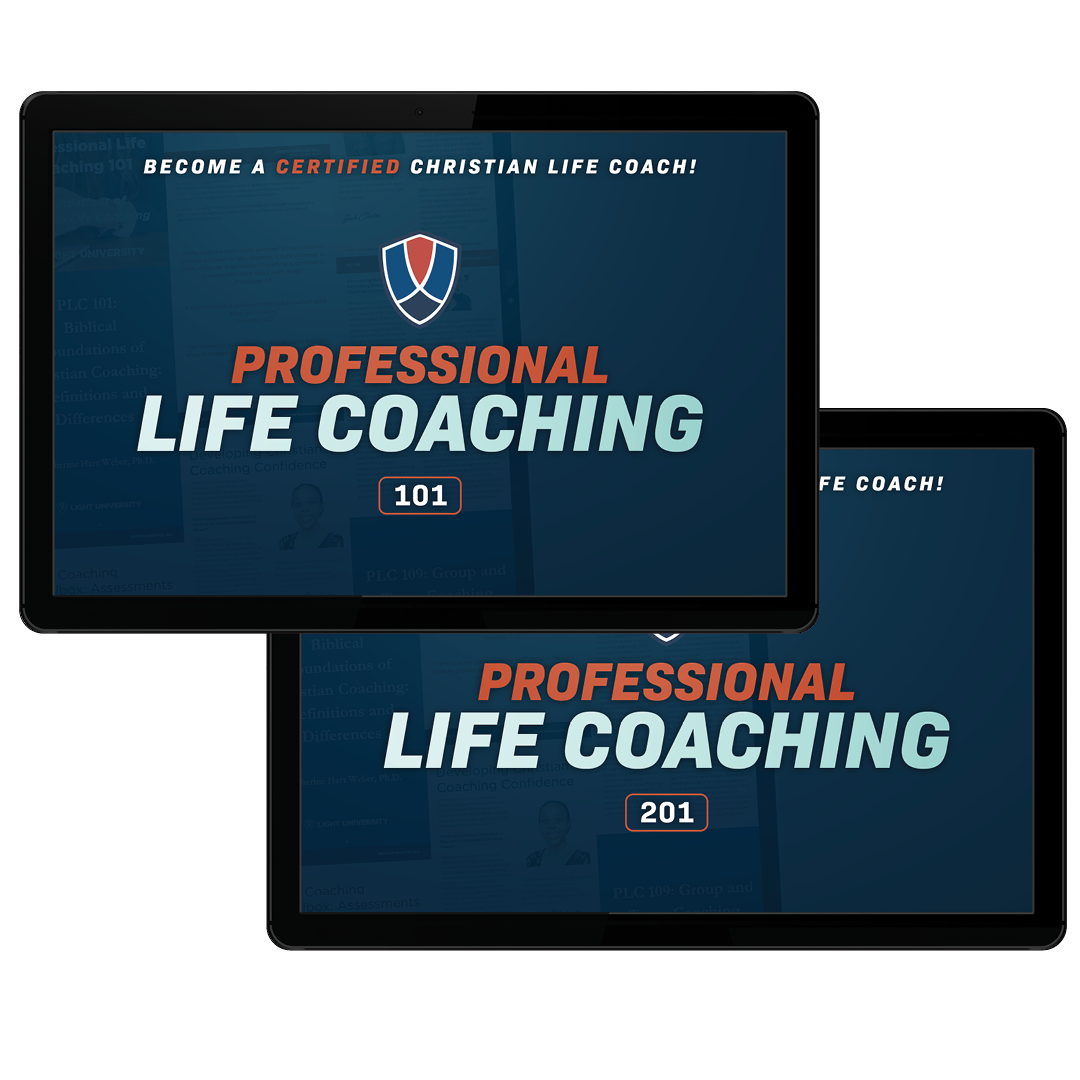
Professional Life Coaching 101
PLC 101: Foundations of Professional Christian Life Coaching
Summary
Life coaching has surged in popularity as more individuals seek guidance to set and achieve meaningful personal and professional goals, overcome challenges, and discover greater purpose. In today’s fast-paced and often overwhelming world, the demand for structured support is higher than ever, and life coaching provides a powerful framework for facilitating lasting change. Professional Life Coaching 101 offers a solid foundation in Christian life coaching, empowering participants with the essential skills and knowledge needed to become both effective and ethical coaches. This course delves into the biblical foundations of coaching, the art of building strong client relationships, and a thorough understanding of the ICCA Coaching Model, providing a Christ-centered approach to transforming lives.
Learning Objectives
Participants will…
- Identify the definitions and distinctions of Christian coaching through a biblical lens.
- Review essential coaching competencies, including active listening, creating awareness, and goal setting.
- Discuss best practices to build strong client relationships based on trust, empathy, and rapport.
- Develop effective strategies to help clients identify and achieve their goals.
- Explore different coaching niches and identify one’s unique niche within the Christian coaching profession.
- Review ethical guidelines to maintain professional standards in Christian coaching.
-
-
Course Lessons and Summaries
PLC 101: Biblical Foundations of Christian Coaching: Definitions and Differences
Catherine Hart Weber, Ph.D.
PLC 102: Competent Christian Coaching: The ICCA Coaching Model
Sylvia Hart Frejd , D.Min.
PLC 103: Establishing the Coaching Relationship: Building Client Rapport
Georgia Shaffer, M.A.
PLC 104: Evoking Awareness: Coaching the Person, Not the Problem
Sylvia Hart Frejd , D.Min.
PLC 105: The Vibrant Person of the Coach
Catherine Hart Weber, Ph.D.
PLC 106: The Coaching Toolbox: Assessments and Resources
Georgia Shaffer, M.A.
PLC 107: Coaching for Change: Goal Setting and Effective Strategies
Jennifer Rowland, M.A., and Dina Jones, M.A.
PLC 108: Developing Christian Coaching Confidence
Daphne Washington, Ph.D.
PLC 109: Group and Team Coaching
Georgia Shaffer, M.A.
PLC 110: Finding Your Coaching Niche
Jason VanRuler , M.A.
PLC 111: Coaching for Resilience: Helping Clients Get Unstuck
Zach Clinton, M.A.
PLC 112: Ethics in Christian Coaching: Essential Guidelines for Professional Practice
Sylvia Hart Frejd, D.Min.
Professional Life Coaching 201
Professional Life Coaching 201: Advanced Coaching Skill Development
Summary
As life coaching continues to grow in popularity, the demand for advanced skills and specialization has become essential for coaches looking to make a deeper, lasting impact. Professional Life Coaching 201 builds upon foundational coaching techniques by introducing advanced methods that empower coaches to foster profound transformation in their clients. The course covers niche areas such as career, executive, leadership, spiritual formation, and marriage and relationship coaching. By mastering these advanced skills, coaches will be well-equipped to facilitate lasting, meaningful change in their clients’ lives and elevate their own coaching practice.
Learning Objectives
Participants will…
- Identify advanced coaching skills to effectively support clients in achieving their personal and professional goals.
- Recognize advanced coaching techniques to help clients overcome significant setbacks and achieve lasting progress.
- Develop culturally competent coaching practices to effectively engage and support diverse client populations.
- Explore strategies for marketing your niche to effectively position your coaching practice in specific areas like career, executive, or relationship coaching.
- Apply advanced coaching techniques to facilitate client growth and effectively manage transformational change processes.
- Implement strategies to enhance both coach and client wellbeing to promote sustainable and effective coaching practices.
PLC 201: Advanced Coaching Skills
Sylvia Hart Fred, D.Min.
PLC 202: Spiritual Formation Coaching
Catherine Hart Weber, Ph.D.
PLC 203: Coaching the Coach
Georgia Shaffer, M.A.
PLC 204: Growth Mindset Coaching for Healthy Habits, Motivation and Performance
Zach Clinton, M.A.
PLC 205: Breakthrough Coaching: Helping Clients Overcome Setbacks
Charles Elliott, M.A., and Ashley Elliott, M.S.
PLC 206: Culturally Competent Coaching
Mark Crear, Ph.D.
PLC 207: Coach and Client Wellbeing
Johnny Parker, D.S.L.
PLC 208: Advanced Coaching Skills for Growth and Change
Dina Jones, M.A.
PLC 209: Marketing Your Niche
Jason VanRuler, M.A.
PLC 210: Career Coaching
Dina Jones, M.A.
PLC 211: Executive and Leadership Coaching
Johnny Parker, D.S.L.
PLC 212: Marriage and Relationship Coaching
Ted Cunningham, MACE
Hear From Our Certified Coaches
Starting out as a coach can feel intimidating, but with the right training and support, you can succeed. Click below to hear from a few of our certified coaches who turned their passion into reality — and learn how you can too!
Try Out the Program for Free
Most coaches struggle not because they lack skill, but because they don’t have a clear niche. This free lesson will show you how choosing the right niche helps you attract the right clients, stand out, and thrive as a coach. It’s just a preview of what this course will teach —how to become a confident coach, find your niche, and build trust with every client.
Professional Life Coaching Certification Program
$644
$279
with Scholarship Tuition
(Including all fees for 1 year access to the program)
Flexible payment options available through Affirm. Plans may require a credit check and are subject to eligibility. Select at checkout.
Frequently Asked Questions
What is a Christian Life Coach?
A Christian life coach is someone who helps and encourages their client from a faith-based through personal or professional challenges from a faith-based perspective. The coach might integrate Biblical principles, draw from Scripture, or take time during the session to pray with the client or clients. In Christian coaching, coaches can help individuals, or couples find God’s vision for their life, marriage and overcome the obstacles that keep them from living out what God has called them to be.
What is the Role of a Christian Life Coach?
A Christian life coach seeks to help people set and reach goals that are in keeping with the life God has called them to. In the coaching relationship, the client is the expert. The coach – who practices active listening and asks thought-provoking questions – guides the course of the conversation. Christian life coaches seek to help their clients:
- Decrease stress
- Discover and achieve their goals and dreams
- Grow self-confidence
- Hone skills and improve performance
- Improve their relationships
A Christian life coach can also help clients respond to personal and professional challenges, especially in the following areas:
- Career development
- Divorce
- Finance
- Grief
- Job performance
- Spiritual wellness
- Relationships
How do I become a successful life coach?
Success as a life coach comes down to two simple things: you and your clients. Many coaches start out part time until they can replace their normal job’s income with a steady stream of revenue from clients. Others may coach part time as long as they wish. There is no simple “path” to becoming successful, and just by becoming a coach doesn’t mean you will have client requests filling your inbox. It takes time, energy and effort. In our certification program, we provide you with training with industry leading coaches who have maintained thriving coach businesses.
How long does it take to become a life coach online?
There are 24 modules in our certification program. Each lesson is about 60 minutes long. We have found most coaches are able to complete the certification program in 30 days or less. Our online programs let you study at your own pace. You will have access to the courses for 365 days from when you enroll.
How much does it cost to become a life coach?
You can complete Light’s professional Christian life coaching certificate for one payment of $634, or through a payment plan with Affirm. Learn more about payment plans here, LINK. Once you have completed the certification program, there is a $199 application fee to become a Certified Christian Life Coach through the International Board of Christian Care.
Is life coach certification necessary?
While it’s not necessary to obtain a credential to start a career as a life coach, our program gives you a head start and instant recognition as a life coach. An IBCC Credential is a professional certification indicating that you have met specific standards and requirements from a faith-based perspective and shows that you are dedicated to upholding strong principles of ethical behavior in coaching.
Why Should I Be Credentialed?
Christian life coaches who become credentialed through our programs have met rigorous educational and experience requirements – and they have demonstrated a thorough understanding of the coaching competencies that set the standard in the Christian coaching profession. In keeping with ICCA’s mission to protect and serve those who seek Christian counseling, our coaches adhere to strict ethical guidelines.
A Christian life coaching certification demonstrates your dedication and credibility as a coach who can effectively guide others to the life that God has called them to.
What's the difference between a life coach and a counselor?
There is a clear distinction between professional mental health services and life coaching. Licensed mental health professionals diagnose and treat emotional and behavioral health disorders. Life coaches help clients focuses on setting and achieving goals. Many ask what the difference is between counseling and coaching.
There is a clear distinction between professional mental health services and life coaching. While both life coaches and mental health professionals seek to improve client wellness, educational and licensure requirements set the two apart. Coaches do not diagnose or treat mental-health-related disorders, but mental health professionals often do. While therapy focuses on mental health, abetting distress, and improving impaired functioning; life coaching focuses on setting and achieving goals.
