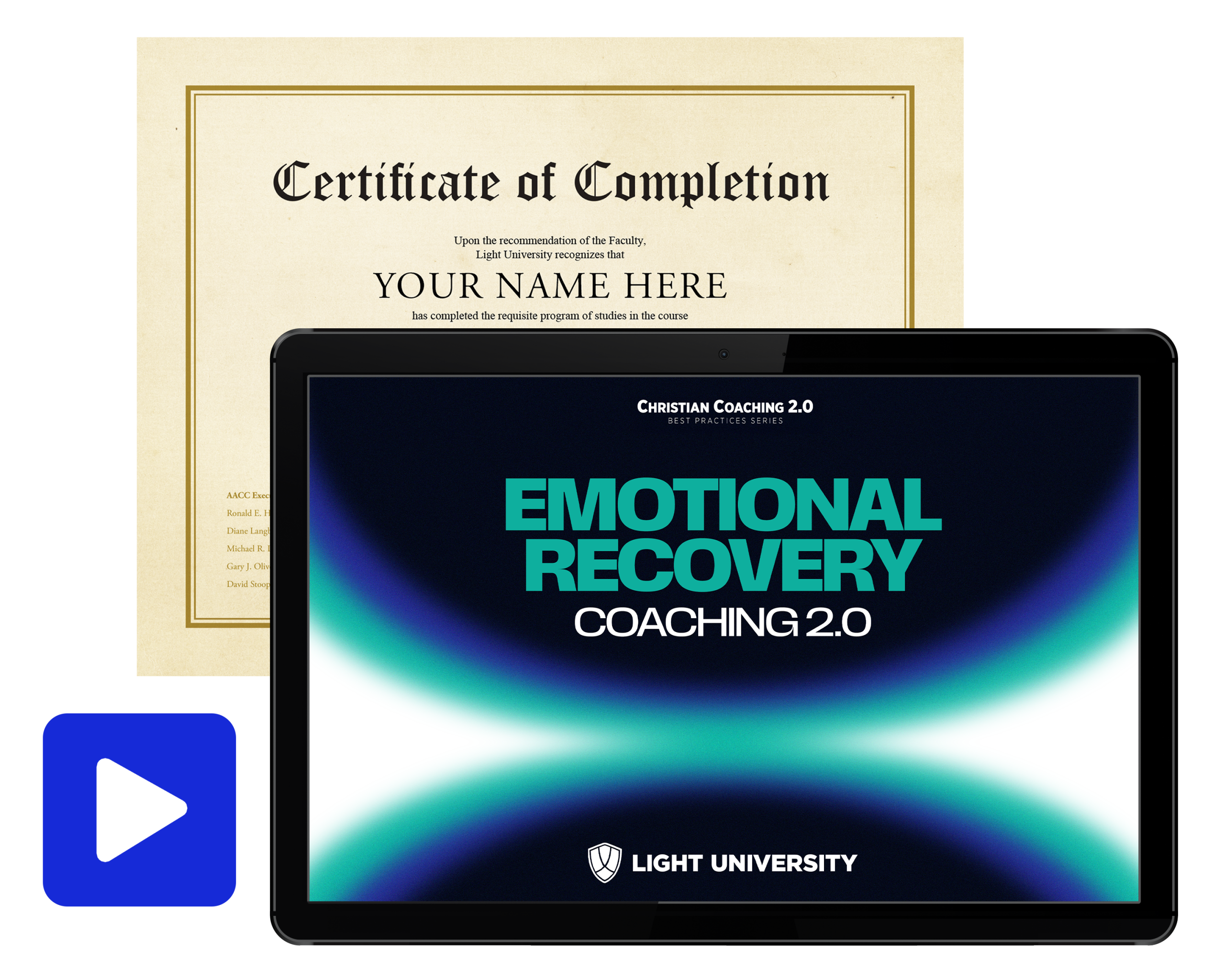
Emotional Recovery Coaching 2.0
$69.00
-
3 credit hours
Continuing Education Accreditations applicable to this course
International Board of Christian Care (IBCC)
Intended Audience: Mental Health Coaches, Life Coaches, Biblical and Pastoral Counselors
About This Course
Emotional Recovery Coaching 2.0 equips coaches to support clients through the process of emotional healing with biblically grounded, trauma-informed principles. The course helps participants understand how emotional pain impacts the body, mind, and spirit, and how to guide clients using safe, practical strategies that build awareness, resilience, and spiritual renewal. Coaches learn to recognize common signs of emotional distress, apply evidence-informed coaching tools that promote regulation and growth, and stay within the ethical boundaries of coaching practice. By the end, participants will be able to confidently help clients identify areas of imbalance, develop healthy coping skills, and move toward lasting emotional stability and faith-based recovery.
Learning Objectives
Participants will…
- Identify how trauma and emotional injury manifest across the physical, emotional, and spiritual dimensions of a person.
- Apply trauma-informed and faith-based coaching strategies that promote regulation, reflection, and resilience.
- Demonstrate the ability to maintain ethical boundaries in coaching while knowing when to refer clients for additional professional support.
Lesson Titles
ERC 101: Body, Soul, Spirit: Understanding the Realms of Healing
Keisha Wright
Emotional recovery is approached through a biblical understanding of the body, soul, and spirit, recognizing trauma as an injury rather than a disorder. Emotional pain often manifests through physical responses, repeated reactions, and spiritual disconnection when left unhealed. Attention is given to identifying indicators of injury, recognizing strongholds, and allowing pain to be heard rather than suppressed. Emphasis is placed on speaking truth over pain, strengthening the spirit through repetition, and guiding individuals toward response rather than reaction through discernment and practice.
ERC 102: Coaching Through Emotional Injury and Identity Restoration
Keisha Wright
Unhealed emotional injuries in the soul often shape identity, decision-making, and relational patterns. Pain patterns and emotional triggers reveal unresolved wounds that must be identified before behavior can change. Focus is given to mapping emotional pain, understanding unhealthy attachments, and recognizing reaction-based coping strategies. Healing involves replacing pain-driven responses with truth, spiritual alignment, and intentional practice. Restoration occurs as individuals learn to respond rather than react, release unhealthy attachments, and rebuild identity rooted in truth rather than past injury.
ERC 103: From Pain to Platform: How to Teach from Your Story
Keisha Wright
Personal story carries power when shared with discernment, timing, and humility. Pain must first cause pause, and unresolved bitterness can distort storytelling if not addressed. Emphasis is placed on boundaries, readiness, and the difference between sharing from scars versus open wounds. Story is framed as assignment rather than identity, with credibility grounded in healing rather than exposure. Pain, process, and purpose must be integrated so story points toward redemption, guiding others toward truth while prioritizing faithfulness over platform.
Continuing Education Approval Statements
 The American Association of Christian Counselors (AACC) is an Approved Continuing Education CE provider by the International Board of Christian Care (IBCC). American Association of Christian Counselors is solely responsible for all aspects of the programs.
The American Association of Christian Counselors (AACC) offers some psychologists, therapists, counselors, social workers and play therapists Continuing Education (CE) credit due for good standing with certain states and a limited number of professional organizations. It remains the responsibility of each participant to be aware of state licensure and CE requirements.
Participants should check their state and/or local regulations regarding required continuing education hours. For more information Light University Continuing Education programs, please visit: https://lightuniversity.com/continuing-education-statements/
*This course is not approved for NBCC credit and does not meet CE requirements for state licensure for mental health professionals