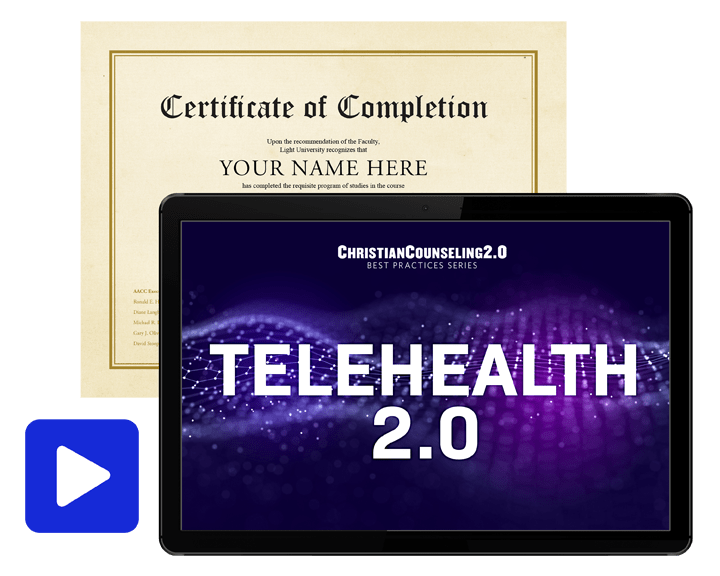
Telehealth 2.0
$69.00
-
3 credit hours
Continuing Education Accreditations applicable to this course
NBCC, IBCC, Florida Board of Clinical Social Work, Marriage and Family Therapy and Mental Health Counseling
Intended Audience: Mental and Medical Health Professionals, Mental Health Coaches
About This Course
Telehealth 2.0 is designed to equip licensed mental health professionals with the knowledge and skills needed to effectively deliver therapy services in a digital environment. As telehealth continues to rise in popularity due to accessibility and convenience, mental health professionals must be adept at navigating the challenges and unique considerations of providing remote mental health care. This training covers best practices, ethical considerations, technological tools, and the adaptation of therapeutic interventions to the virtual platform. Special attention is given to the development of rapport, maintaining confidentiality, legal requirements, and cultural competence in digital settings. By the end of the training, participants will be prepared to use Telehealth modalities to enhance client care while upholding the highest standards of professional practice.
Learning Objectives
Participants will…
- Examine the key legal and ethical guidelines for Telehealth, including HIPAA compliance, informed consent, and the management of client confidentiality in virtual spaces (American Counseling Association, 2014).
- Describe how to effectively use Telehealth platforms, troubleshoot common technical issues, and ensure a smooth client experience, while maintaining professionalism and rapport (Smith & Jones, 2020).
- Identify how to modify traditional therapeutic interventions to be effective in online sessions, ensuring client engagement and therapeutic progress (Simpson, 2009).
- Outline specific challenges clients may face during virtual therapy, such as technological barriers, privacy concerns, and distractions, and will develop strategies to mitigate these obstacles (Yellowlees et al., 2010).
- Describe how cultural, socioeconomic, and geographic factors affect access and experience in Telehealth, with a focus on promoting equity in remote therapeutic practice (Pierce, 2019).
Lesson Titles and Descriptions
THC 101: History and Current Trends in Telehealth
Mark Mayfield, Ph.D.
This lesson provides licensed mental health professionals with a comprehensive overview of telehealth's evolution and modern applications. It emphasizes the growing role of digital platforms in therapy due to their accessibility and convenience. The lecture covers the historical development of telemedicine, key technological advancements, and current telehealth platforms. Special attention is given to ethical practices, legal considerations, and how participants can adapt their therapeutic approaches to ensure effective virtual care for clients.
THC 102: Ethical and Legal Considerations
Mark Mayfield, Ph.D.
This lesson provides licensed mental health professionals with critical guidelines for maintaining compliance in telehealth practice. It emphasizes the importance of understanding HIPAA regulations, informed consent, and confidentiality in virtual therapy sessions. This lesson also covers legal requirements for licensure, cross-state practice, and secure use of digital platforms. Participants will gain insights into upholding ethical standards while managing client records, ensuring privacy, and navigating the complexities of telehealth law to protect both the therapist and the client.
THC 103: Telehealth Best Practices
Mark Mayfield, Ph.D.
This lesson provides licensed mental health professionals with essential strategies for effectively delivering therapy services online. It emphasizes the importance of creating a therapeutic presence in virtual sessions, adapting in-person techniques to digital settings, and ensuring emotional support, client engagement, and confidentiality. Practical tips for optimizing the telehealth environment, enhancing communication, and managing technical challenges are highlighted. The lesson also discusses maintaining rapport, accountability, and legal standards, while leveraging technology to improve client outcomes and continuity of care.
Course Presenter
Mark Mayfield, Ph.D.
Continuing Education Approval Statements
 American Association of Christian Counselors has been approved by NBCC as an Approved Continuing Education Provider, ACEP No. 7543. Programs that do not qualify for NBCC credit are clearly identified. American Association of Christian Counselors is solely responsible for all aspects of the programs.
 The American Association of Christian Counselors (AACC) is an Approved Continuing Education CE provider by the International Board of Christian Care (IBCC). American Association of Christian Counselors is solely responsible for all aspects of the programs.
The American Association of Christian Counselors (AACC) offers some psychologists, therapists, counselors, social workers and play therapists Continuing Education (CE) credit due for good standing with certain states and a limited number of professional organizations. It remains the responsibility of each participant to be aware of state licensure and CE requirements.
Participants should check their state and/or local regulations regarding required continuing education hours. For more information Light University Continuing Education programs, please visit: https://lightuniversity.com/continuing-education-statements/