
SALE ENDS: MAY 31
Learn How to Build an Effective Mental Health Ministry
This newly added specialization equips Mental Health Coaches with a roadmap to build Christ-centered mental health ministries. It’s time to bring hope and healing to our churches and communities in the midst of this mental health crisis.
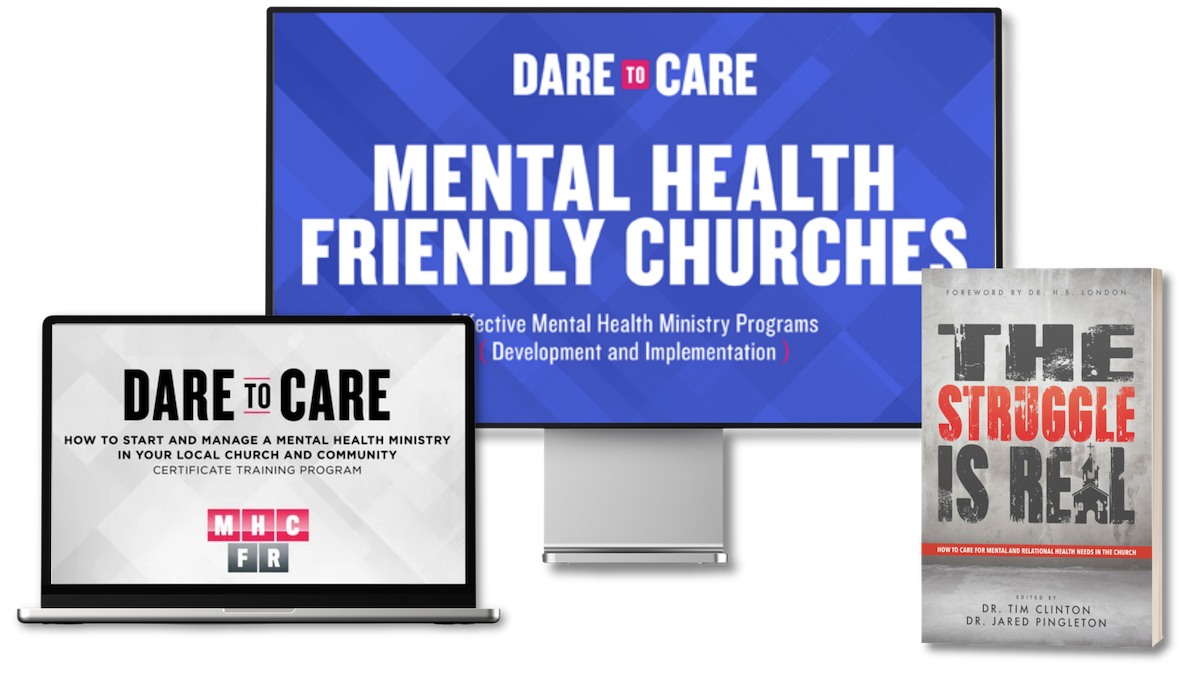
Free Book to First 100 Enrolled
30 Hours of Video Training
30 Coaching CE Credits
Build a Christ-Centered Mental Health Ministry
Be the Leader Your Church Needs in the Mental Health Crisis
Effectively Assess the Mental Health Needs in Your Church
Learn how to recognize the hidden struggles sitting in your pews. This course equips you to evaluate the mental and emotional needs in your congregation and community—so you can respond with purpose, compassion, and clarity.
Build a Safe, Stigma-Free Mental Health Ministry
Equip and Empower Mental Health Coaches to Lead with Impact
You don’t need to do it alone. Learn how to develop a team of trained volunteers and coaches who can walk with hurting individuals—offering hope, healing, and a clear path forward, all rooted in the love of Christ.
View Full Lesson List
Mental Health Ministry 101
Summary
The current Mental Health crisis that we find ourselves in, only further escalated by the COVID-19 pandemic, has presented the Church with a unique opportunity and mission field to bring hope to those dealing with the pace, pain, and pressure of everyday life. For years, people have been more likely to seek out a pastor, priest, or rabbi first when in emotional or mental distress. Historically, the Church has lacked the practical steps to address mental health, but now the Church can be at the forefront of erasing the silence, shame, and stigma of Mental Health. This course provides foundational tools for pastors and mental health coaches to create and maintain a thriving mental health ministry in the Church and local community.
Learning Objectives
Participants will:
- Assess how the Church can become a catalyst in addressing the mental health crisis
- Discover how to erase the silence, shame, and stigma of mental health in the Church
- Identify foundational tools for pastors and mental health coaches to create and maintain a thriving mental health ministry in the Church and local community
Course Lectures
MHCM 101: Mental Health Ministry: An Introduction
Tim Clinton, Ed.D.
Mental health has and will continue to be one of the biggest issues that the Church will face in the next 10 years. One in five U.S. adults live with a mental illness. That means there are people sitting in your pews who are struggling with life’s greatest issues and challenges. People with these and other concerns typically turn first to the church for help, yet most churches are not equipped to adequately minister to the depth and magnitude of these overwhelming problems. This course was created as a comprehensive resource to provide the church with practical tools to care for these hurting people in a biblically sound and emotionally healthy way.
MHCM 102: Mental Health Inventory of Your Church
Ed Stetzer, Ph.D.
Do you know what your congregation believes about Mental Health? Do your members know where to go in crisis? As you look around any church, you will see hurting people. Having mental health resources readily available for your congregants in times of crisis or need is an important part of pastoral care. This session will help you understand how to assess the mental health needs of your church and community.
MHMC 103: Collaborative Care: Understanding Scope and Practice Issues
Jared Pingleton, Psy.D.
We can’t do it all. We hear this saying a lot, but as ministry leaders we tend to ignore this and try to do as much as we can. However, God, in His great wisdom, gave us the Body whose parts function in different ways so that the needs of all might be met. In this session you will gain a better understanding of the scope and practice issues associated with a healthy mental health ministry.
MHCM 104: Legal and Ethical Issues: Making Effective Referrals
David Jenkins, Psy.D.
It is important to know your role in the continuum of care. Mental health problems are serious issues that can turn life-threatening very fast. It is important to understand your responsibilities and limits in this area to be an effective leader in your Church. In this session, you will learn about the legal and ethical issues that can arise, and how and when to make an effective referral.
MHCM 105: Leading an Effective Mental Health Support Group Ministry
Stephen Greggo, Psy.D.
Mental health support groups can take your small, but mighty army of mental health coaches to the next level. By including mental health support groups in your ministry model, you are utilizing God’s resources in the most effective and efficient way possible. These groups foster healing and community that simply can’t be found anywhere else. In this session you will learn the dynamics and skills necessary to lead effective mental health support groups in your church.
MHCM 106: Sin, Mental Health and Pathology
Matt Stanford, Ph.D.
One of the most common misconceptions in the Church today is that mental illness results from weak faith, personal sin, or the demonic. These beliefs are often rooted in a misunderstanding or misconception of what mental illness is. In this session we will discuss the relationship between sin and disorder within mental health.
MHCM 107: Spiritual Growth, Discipleship and Soul Care Ministry
Yulanda Tyre, Ph.D.
A thriving soul care ministry equips the Church to help those in the pews cope with, manage, or overcome life’s problems with scriptural support and a Biblically based pathway for healing. Soul care provides hope and reassurance to those struggling that God is present and active in our problems. In this session, you will learn how to help people discover and share the message that no matter what, God cares for them, and offers a divine path for healing.
MHCM 108: Crisis, Suicide and Trauma Response
Jennifer Cisney, M.A.
First responders make the difference between life and death for trauma victims. But what is often not recognized is that when disaster strikes, spiritual caregivers are often among those first on the scene. For these caregivers their response should also help propel survivors toward positive transformation. This session focuses on critical responses that are key in the aftermath of natural disaster, community violence, personal injury, and crime. These basics include: the power of presence, safety, assessment and triage, how we help, putting the pieces together, telling the story, hope, and how the first 48 hours are critical to the recovery of trauma victims.
MHCM 109: Multicultural Mental Health Ministry
Fernando Garzon, Psy.D. and Melvin Pride, Ph.D.
Part of fulfilling the great commission is building bridges within the Church to create authentic, genuine unity to foster holistic healing for every nation, tribe, and tongue. This session will discuss the importance of incorporating different cultural values and perspectives as you serve as a catalyst for righteousness, healing, and reconciliation.
MHCM 110: The Brain, Medicine and Mental Health
Curt Thompson, Psy.D.
The use of medicine is not often questioned in the treatment of physical disorders, but often there is a stigma around the use of medication for mental disorders. In this session, you will learn the role of medication in the treatment of psychiatric disorders, as well as some of the questions that are commonly raised in the Church on this issue.
MHCM 111: Boundaries, Selfcare and Burnout
Ron Hawkins, Ed.D., D.Min.
Stress, anxiety, and burnout are realities that caregivers face daily. As those serving in ministry, we must be aware that we can’t do it all. In this session, you will learn how to set boundaries, practice self-care and prevent burnout.
MHCM 112: Leadership, Growth and Development
Matt Stanford, Ph.D.
While a majority of pastors and congregants believe that the church has a responsibility to provide resources and support for those living with serious mental illness, less than a quarter of churches offer any type of organized support for these individuals and their families. In this session you will learn a step by step process for starting and sustaining a successful mental health ministry at your church.
MHCM 113: Foundations, Procedures and Promotional Strategies
Matt Stanford, Ph.D.
For the Church to transform the mental health care system, it is not necessary for every congregation to be involved at the same level, it is only necessary that each congregation become involved. In this session you will learn the best practices for leading and growing a mental health ministry within any church.
Mental Health Ministry 201
Summary
Research shows that one in four individuals seeking help for mental health concerns turn to faith leaders before seeking help from a mental health professional. Religion and spirituality often play a vital role in the healing process. However, in order to maximize the Church’s healing potential, Churches must strive to become actual sanctuaries, truly safe harbors for hurting persons and relationships. Tragically, many people shy away from the potential healing ministry of the Church due to fears of being judged, criticized, and rejected if they are vulnerable to sharing their pain, addiction, or issues. Mental Health Friendly Churches: Development and Implementation of Effective Mental Health Ministries is a comprehensive “toolbox” designed to help Church leaders build a team of trained volunteers to implement specialized mental health-related ministries to hurting people and relationships in a practical way.
Learning Objectives
Participants will…
- Identify the mental and behavioral health needs of their church and community
- Assess the church’s mission and role in addressing the mental health crisis
- Develop strategies and best practices to implement ministries to address specific mental and behavioral health needs
Course Lessons and Topics
MHCM 201: Your Role in Mental Health Care and the Church’s Mission
Matt Stanford, Ph.D.
Our nation is experiencing a dangerous imbalance. More than one-third of U.S. citizens live in an area lacking mental health professionals, and experts estimate there will be a shortage of more than 15,000 providers by 2025. There simply are not enough providers to meet the demand. This is where Churches can implement peer-led models that are scalable, affordable, and effective. Because peers are embedded in the Churches and communities they serve, they can reach and assist at-risk individuals with enhanced empathy and impact. There is no one-size-fits-all answer to equipping the local Church to respond to the needs of the hurting. Instead, each of you will need to evaluate the resources you have in your congregation and in your broader community to become a more mental health friendly Church. In this lesson you will learn the significant role God has positioned the Church to play in caring for those with mental health problems.
MHCM 202: Mental Health Ministry for Stress and Anxiety
Joshua Knabb, Psy.D.
Stress and anxiety are biological reactions that are the body’s way of telling us something isn’t right. But often stress and anxiety can become overwhelming and persistent. When it begins to interfere with regular daily activities, or even makes them impossible, it may be an anxiety disorder. Anxiety disorders are the most common mental disorders in the U.S. In this lesson you will learn how the Church can be a catalyst for helping those struggling with stress and anxiety.
MHCM 203: Mental Health Ministry for Depression
Karl Benzio, M.D.
Sadness, grief, and even passing feelings of hopelessness or despair are part of the human experience. Most people will experience these feelings from time to time, but they will generally improve within a few days, or as the situation changes. While friends and family can provide support, they often don’t have the same level of understanding as others who have been through the same experiences. In this lesson, you will learn how the Church can support those with depression by providing ongoing social contact with others in the same position, opportunities to share struggles and work through solutions.
MHCM 204: Mental Health Ministry for Grief and Loss
Jennifer Cisney Ellers, M.A., and Kevin Ellers, D.Min.
Grief is a normal response to loss during or after a disaster, traumatic event, or loss of life. The grief process can come in relentless waves filled with various, intense emotions, but no one should be left to suffer alone. Churches should be equipped with the necessary tools to help serve, support, and encourage those who are struggling. This lesson will share the do’s and don’ts of supporting those experiencing grief and loss, and resources available to Churches.
MHCM 205: Mental Health Ministry for Wellness
Greg Jantz, Ph.D.
As a first line of defense against mental health issues, the Church can and should be more proactive in promoting the physical, emotional, mental and spiritual well-being of their congregation. This starts by educating church leaders about mental health, make sure they understand that mental health conditions are just as real (and common) as physical health conditions, and that it is likely that several families in the congregation are or will experience mental health challenges. This lesson will provide you with practical tools to start a wellness-based Church ministry to support the whole person.
MHCM 206: Mental Health Ministry for Life Recovery
John Eklund, M.S.W.
We all have struggles in life; struggles with addictions, food, depression, anxiety, and relationships to name a few. But there are numerous different approaches to recovery. In this lesson you will learn about the time-tested process of the 12 steps combined with ageless Biblical principles to help others experience life change, enrich their recovery and bring them closer to the heart of God.
MHCM 207: Mental Health Ministry for Addiction and Recovery
Jim Cress, M.A.
For years the Church has provided help to those struggling with drug and alcohol addictions and co-occurring mental health issues. Research has shown that faith can be a protective factor in the recovery process and social support can have a positive impact on prevention and treatment of substance use disorders. In this lesson you will learn how to provide a safe home for women and men recovering from substance use disorder to grow as individuals and as a part of a recovery community.
MHCM 208: Mental Health Ministry for Serious Mental Illness
Michael Lyles, M.D.
Research tells us that when most people suffer from a mental health crisis, the first person they turn to for help is not a physician, a psychiatrist, or a social worker, but a pastor, a priest, or a minister. This lesson will address how churches can provide triage level support for those struggling with serious mental illness, and not let them fall through the gaps.
MHCM 209: Mental Health Ministry for Pornography and Sexual Addiction
John Thomas, Ph.D., Ph.D.
Pornography and sexual addiction are silent struggles that plague those in the pews. Regularly thought just to be an issue for men, women are not immune to pornography or sexual addiction. As isolation and secrecy are common for those with this struggle, this lesson will teach you how to create a safe space and develop a ministry to help men and women find freedom from pornography and sexual addiction.
MHCM 210: Mental Health Ministry for Sexual Abuse and Violence
Jennifer Ellers, M.A.
Based on reported cases, every 68 seconds someone in America is sexually assaulted and every 9 minutes that someone is a child. There are over 42 million adult survivors of childhood sexual abuse in America. It’s not always easy to know what to say when someone tells you they’ve been sexually assaulted. For a survivor, disclosing to someone they care about can be very difficult. This lesson will address how churches can support and help those who have experienced sexual abuse and violence.
MHCM 211: Mental Health Ministry for Trauma Recovery
Heather Gingrich, Ph.D.
Trauma is generally defined as an emotional response to a terrible event like an accident, rape, or natural disaster. Research shows that about 6 of every 10 men and 5 of every 10 women experience at least one trauma in their lives. Trauma raises questions about who God is; his character, his faithfulness, his purposes, and his capacity to keep us. In this lesson, you will learn how trauma affects individuals and communities, how to provide a first response to those who have experienced trauma, and how to help in the recovery process.
MHCM 212: Mental Health Ministry for Family Trauma and Dysfunction
Mark Mayfield Ph.D.
When a family member is experiencing a mental or substance use disorder, it can affect more than just the person in need of recovery. Evidence has shown that some people have a genetic predisposition for developing mental and substance use disorders and may be at greater risk based on environmental factors. This lesson will address how to adequately care for families who have been affected by a family member’s mental health problems or history of substance use.
MHCM 213: Mental Health Ministry for Marriages
Sharon May, Ph.D.
On any given weekend, countless couples file into churches across the country, looking their “Sunday best” and quietly keeping a marriage problem to themselves. The stigma of counseling may be keeping them from seeking help, or they may feel all alone and assume that nobody else would understand. Their marriages are hurting because of mental health issues, and nobody has recognized the signals for help. In this lesson you will learn how to provide a ministry for couples to be mentored by those who are more seasoned and have experienced similar life events and circumstances.
MHCM 214: Mental Health Ministry for Divorce and Blended Families
Ron Deal, M.MFT.
Divorce and blended family ministry is a tremendous opportunity for churches across America and throughout the world, but it must begin with a willingness to re-tool yourself and expand your understanding of complex family systems. Clearly, the relational and spiritual issues of divorce and blended family members are opportunities for the church to touch people’s lives with the power of the Gospel. However, the church has been far behind in its understanding of the impact of divorce and blended families and how to help. This lesson will discuss how Churches can be proactive in support families who have experienced divorce, or navigating blending a family together.
MHCM 215: Mental Health Ministry for Children and Adolescents
Chap Clark, Ph.D.
Our children and adolescents are facing a mental health crisis. 50% of mental illness begins by age 14 and families desperately need practical advice and pastoral care on these disorders, and the thorny issues that often surround them. This lesson will address how to recognize the signs and symptoms of the leading mental health issues for children and adolescents, how to respond and how to help families find the appropriate care they need.
MHCM 216: Mental Health Ministry for Seniors: Aging and Dementia
Kathie Erwin, Ph.D.
Over 20% of adults aged 60 and over suffer from a mental or neurological disorder and 6.6% of all disability among people over 60 years is attributed to mental and neurological disorders. This lesson will address the tough issues that seniors wrestle with today, as well as learning to confidently use the Bible when working with those who need direction, support and encouragement.
MHCM 217: Becoming a Mental Health Friendly Church and Community
Matthew Stanford, Ph.D.
The church is uniquely positioned to offer things our mental health system often lacks: hope, a holistic view of human nature, accessible care, and a supportive community. In this course you’ve learned how to set up mental health ministries for some of the leading issue’s facing our Churches and communities today. In this lesson, we will conclude the course by discussing how you can truly become a mental health friendly Church and community.
How to Get Started and Launch a Mental Health Ministry
Enroll in the Course
You’ve felt the pull to help those facing mental health challenges — now it’s time to take a step further.
Access Expert Guidance and Actionable Strategies
Gain Christ-centered, step-by-step training that you can apply immediately to meet the needs of your church or community.
Launch and Lead Your Ministry with Confidence
Mental Health Ministry Bundle
$628
$195
(includes program cost and technology fees, shipping included at checkout)
✔Mental Health Friendly Churches: Development and Implementation of Effective Mental Health Ministries
✔Dare to Care: How to Start and Manage a Mental Health Ministry in Your Church or Community
✔
The Struggle is Real Book
Frequently Asked Questions
What is a Mental Health Ministry, and why does my church need one?
A mental health ministry is a purposeful, church-led initiative that supports individuals dealing with emotional, psychological, or relational struggles—from anxiety and depression to trauma, addiction, grief, and more. These issues are already sitting silently in your pews every Sunday. This course helps you respond with compassion and structure, turning your church into a place of refuge, restoration, and hope. In a world overwhelmed by isolation and mental health challenges, your church can be a frontline of healing.
Who is this course designed for?
This course is for pastors, lay leaders, ministry teams, mental health coaches, and everyday believers who feel a burden for the hurting. Whether you’re already serving people in crisis or just starting to explore mental health ministry, this course meets you where you are and equips you to lead with confidence, clarity, and Christ-centered compassion.
Do I need a background in counseling or psychology to take this course?
Not at all. This course was created with the local church and mental health coach model in mind. You just need a heart to serve and a willingness to learn. We’ll walk you through practical, biblically sound strategies so you can minister effectively within your church’s calling and capacity.
How long does the course take to complete?
This 30 hour course is self-paced, so you can move through it on your own schedule. Most learners complete the content in 6–8 weeks, spending just a few hours each week. Whether you dive in full-time or go step-by-step alongside your current ministry responsibilities, the format is flexible enough to fit your life.
What will I be able to do after completing this course?
You’ll be equipped with a biblical foundation and practical tools to assess your church’s mental health needs, lead effective support groups, create a welcoming environment for those who are hurting, and collaborate with licensed professionals when needed. You’ll walk away with the confidence and clarity to begin or expand a thriving mental health ministry in your church or community.
Is this a certification program?
This specific course does not include certification. Instead, it focuses on implementation—giving you the knowledge and skills to build or support a mental health ministry within the church context. If you’re looking for certification as a Mental Health Coach or Life Coach, we offer additional programs you can explore alongside or after this course.
Can I take this course even if my church doesn’t currently have a mental health ministry?
Yes! In fact, this course is perfect for those starting from scratch. You’ll learn step-by-step how to assess your church’s needs, gather support, train volunteers, and launch a ministry that fits your congregation’s size, culture, and mission. You don’t need a fully formed team—just a vision and a starting point.
If you want more training on becoming on a mental health coach, please click here: https://lightuniversity.com/mental-health-coaching/
How much does the course cost, and are scholarships available?
The cost of the program is $598, plus $29.95 (and shipping) for the The Struggle is Real Book. The cost is $185 ($149 course fee and $36 technology fee) with the current promotion.
